Hybrid work gives executives new flexibility to optimize talent and reduce costs, but it also introduces a problem many leaders underestimate: proximity bias. It’s the instinctive tendency to favor employees who are physically present. In a world where teams blend office and remote work, this bias creates an uneven playing field that affects performance, engagement and retention.
For executives focused on profitability and workforce optimization, proximity bias isn’t just a cultural issue. It is a measurable business risk. It affects who you promote, which employees you recognize and how fairly you distribute work. And without the right visibility into work patterns, most leaders don’t realize it’s happening.
As organizations embrace hybrid workforce management, eliminating proximity bias is now essential for maintaining fairness, productivity and long-term growth.
Summary/TLDR: Proximity bias (favoring in-office employees simply because they’re visible) creates measurable risks in hybrid workplaces, from stalled promotions to talent loss and reduced innovation. Eliminate this bias by replacing visibility-based decisions with objective workforce analytics, implementing equitable leadership practices and building systems to ensure every employee is evaluated on outcomes, not location.
What is proximity bias and why does it exist?
Proximity bias is the unconscious tendency to trust and value employees who work in the office more than those working remotely. HR leaders and workplace researchers note that this bias stems from a long-standing habit of equating visibility with reliability. Proximity bias occurs when leaders perceive in-person employees more favorably simply because they’re physically closer.
Proximity bias often leads to onsite employees receiving more attention, informal feedback and opportunities. Remote employees, even when performing at the same level, experience less leadership visibility and less recognition.
Recent data shows how deeply this bias is ingrained. A recent survey revealed 96% of U.S. executives notice in-office contributions more than equal contributions from remote employees.
Proximity bias comes from a natural, but outdated, mental shortcut: “I trust what I see.” In modern hybrid teams, this misaligned instinct doesn’t reflect how work gets done.
What is the impact of proximity bias on performance and progress?
Proximity bias creates a two-tiered workforce where career growth depends on visibility, not contribution. For executives, the opportunity cost tied to this bias is significant: top remote talent may be undervalued, overlooked or eventually lost to competitors.
Identifying hidden performance gaps
Remote and hybrid employees consistently meet or exceed productivity expectations. Yet leaders often doubt this productivity because they can’t physically see it.
Microsoft found that 87% of employees believe they’re productive, while 85% of leaders struggle to trust that productivity is real when teams work remotely. This “productivity paranoia” widens the gap between actual output and perceived contribution, setting the stage for missed opportunities. Management fails to see remote employees who deliver exceptional work; without visibility, their contributions remain underrecognized. Over time, this erodes engagement and increases turnover risk.
How proximity bias threatens career advancement
Proximity bias negatively impacts the career progress of remote and hybrid employees, throttling their growth and limiting their future paths for new challenges and advancement opportunities.
A recent survey found that only 42% of full-time remote workers received a promotion in 2023, compared to 55% of fully in-office employees. Remote workers were also less likely to receive a large raise, despite equal or higher productivity levels.
This creates a productivity–promotion paradox: Remote employees outperform on output, yet fall behind on advancement because visibility still dictates managerial decisions.
This paradox serves as an important red flag to executives. If location, rather than performance, determines who rises, leadership pipelines become distorted. High-impact talent stalls, attrition rises and organizations lose their competitive edge.
Recognizing and measuring proximity bias in hybrid teams
Executives can’t address proximity bias until they can see it. To eliminate it, you need objective, consistent data that shows how work actually happens across teams.
The prevalence of proximity bias in hybrid workplaces
Although leaders acknowledge the tendency to notice in-office work more, most don’t recognize how this affects team dynamics. One study found less than half of employees realized that working remotely may hurt their visibility with leadership. This disconnect creates blind spots for both leaders and employees.
Identifying the subtle signs leaders miss
Proximity bias rarely shows up in dramatic decisions. It shows up in the small moments that determine opportunity:
- Who managers ask for quick input
- Who they assign to high-impact projects
- Who receives informal recognition
- Who’s invited to strategic meetings
- Who gets more real-time coaching
These subtle differences accumulate and become structural disadvantages.
Using workforce analytics for data-driven detection
You can’t fix a problem that you can’t measure. By using workforce analytics and intelligence to track focus time, collaboration patterns, workload distribution and outcomes, leaders gain a complete view of employee contribution — without relying on physical presence.
Workforce analytics and intelligence helps uncover patterns that managers miss, such as:
- Remote employees who deliver more focus work than in-office peers
- Individuals overworking after hours to stay visible
- Uneven meeting participation across locations
For executives, this data replaces assumptions with clarity. It enables leaders to assess performance fairly, distribute work equitably and identify when certain groups are being unintentionally sidelined.
Managing, overcoming and eliminating proximity bias in hybrid work
Fixing proximity bias requires intentional leadership and systems that create equal access, visibility and trust across locations. Awareness alone does not change outcomes. Leaders need a structured, data-informed framework.
Leadership tactics to level the playing field
Harvard Business Review emphasizes that hybrid teams require leaders to be deliberate about trust and communication. Redesign practices that work in the office to support distributed teams. This includes establishing consistent check-ins with all employees, rotating meeting leadership and documenting decisions.
Effective leaders standardize performance expectations. When metrics focus on outcomes — not location or activity — it’s easier to evaluate employees objectively and avoid visibility-driven favoritism.
Building inclusive employee frameworks
Highly effective hybrid teams operate with a “remote-first” mindset. Ensure every employee receives the same access to information, visibility and recognition — and structure meetings and documentation so no one is disadvantaged by location.
In addition, give remote employees the same opportunities for mentorship, development and high-impact assignments as their onsite peers. This requires intentional planning — not assumption.
How data visualization fosters equitable recognition
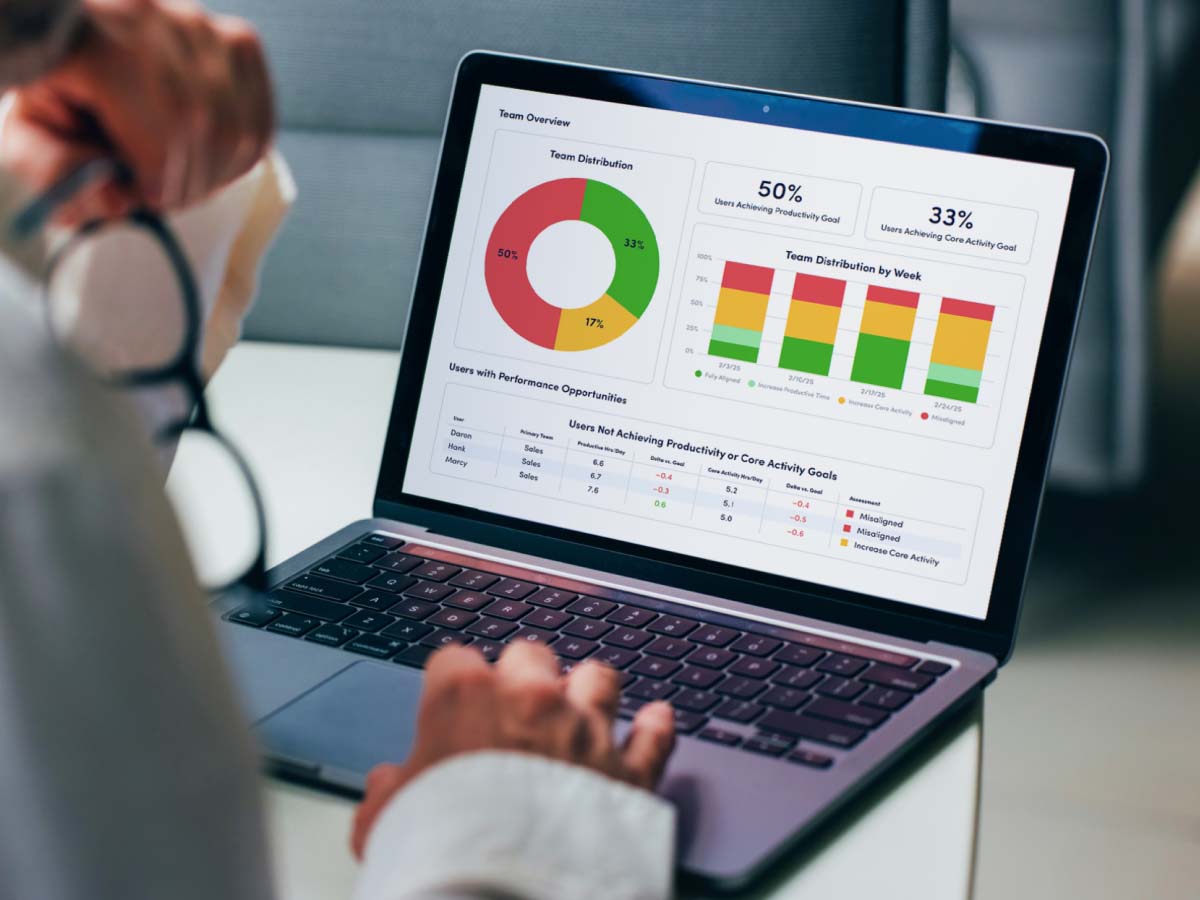
Workforce analytics give leaders a clear, unbiased view of employee contributions. Dashboards that highlight productivity, focus time, workload balance and collaboration patterns make invisible work visible. Instead of relying on anecdotal observation, review objective data when assigning projects, writing performance reviews and recognizing achievements.
This does not replace human judgment. It strengthens it. Data provides executives with a level foundation on which to make equitable decisions, and reduces the likelihood of unconscious bias affecting advancement opportunities.
Best practices for managing and eliminating proximity bias
Eliminating proximity bias is not a one-time initiative. It requires long-term commitment supported by systems and data. Here are practices successful hybrid organizations use to ensure fairness:
Adopt data-first management
Lead by requiring data-informed decision-making. When leaders evaluate performance using objective metrics, every employee — remote or onsite — receives equal consideration.
Create transparent recognition programs
Don’t tie recognition to physical presence. Share celebrations, wins and milestones across digital channels so all team members receive equal visibility.
Provide continuous coaching to all team members
Coaching disparities are one of the biggest drivers of uneven development. Structured 1:1s, consistent feedback loops and clear expectations help level the playing field regardless of location.
The business case for eliminating proximity bias
Proximity bias is not just a fairness issue. It’s a profitability issue. When location or any type of bias subtly shapes decisions, organizations lose talent, innovation and efficiency.
Quantifying the cost
Global research shows the scale of the problem. According to Gallup estimates, disengaged employees cost companies $8.8 trillion annually. Bias is a major driver of disengagement, especially when high-performing remote employees feel overlooked.
Understand that equity drives profitability
When employees sense bias, they’re 2.6× more likely to withhold ideas and creativity, leading to missed innovations. Conversely, companies with more diverse and inclusive leadership teams are 39% more likely to financially outperform peers. Fairness is not just ethical; it’s financially strategic.
Use workforce analytics to drive ROI
Objective workforce analytics help leaders understand where bias affects performance, recognition and retention. By improving equity, organizations improve talent utilization and reduce turnover costs. This data-driven approach builds a workforce environment where all employees succeed — and where leaders make decisions based on results, not visibility.
To explore how analytics supports equity and eliminates proximity bias, learn more about ActivTrak’s workforce management solutions.
Ready to eliminate proximity bias and unlock a fair, data-driven hybrid workplace?
See how ActivTrak gives leaders real visibility into performance, engagement and productivity without guesswork or bias.